
SOCKS5 – IPv6 & IPv4 Proxy VPN
v20261001
• Premium
| Updated On | |
|---|---|
| Google Play ID | earspy.hearboost.spyearlisten |
| Category | Tools |
| Version | 9.1.1 |
| Size | 41 MB |
| MOD Features | Unlocked |
| Requires | Android 5.0 |
| Price | |
| Free | |
| Content Rating | |
| Everyone | |
| Internet Required | |
| Unknow | |

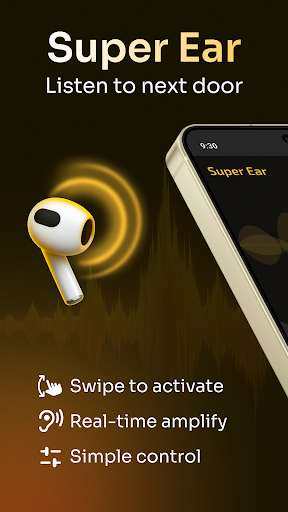
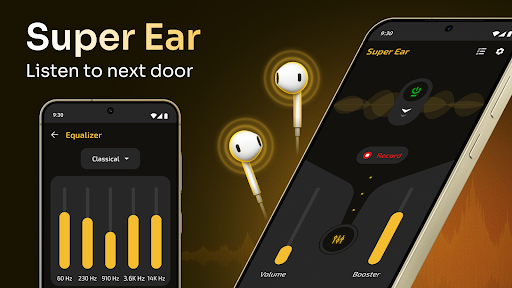
Super Ear- Listen To Next Door is an audio-focused app designed to help users explore and amplify sounds through their mobile device. By using the phone’s microphone and connected audio equipment, the app can provide a more noticeable listening experience in certain situations. Its concept may appeal to users interested in hearing assistance, sound monitoring, or experimenting with the capabilities of a smartphone microphone.
Super Ear focuses on using a smartphone as a basic audio amplification tool. The microphone captures surrounding sounds, while headphones or other compatible audio equipment can allow users to hear the processed output more clearly. This approach turns an everyday smartphone into a simple tool for exploring nearby audio.
The app can be interesting for users who want to experiment with microphone-based sound amplification. However, performance depends heavily on the quality of the phone microphone, connected headphones, environmental noise, and the distance from the sound source. It should therefore be viewed as a supplementary audio tool rather than a replacement for professional hearing equipment.
One of the central features of Super Ear is its use of the smartphone microphone to capture environmental sounds. When headphones are connected, users can listen to the microphone input through the device. This can make certain sounds more noticeable, particularly in relatively quiet environments.
The experience can vary significantly between devices. A modern smartphone with a good microphone may produce a different result from an older device. Background noise can also affect clarity, so users should choose an appropriate environment when testing the app.
The straightforward concept makes the app accessible to users who want to experiment without specialized audio equipment. Its potential uses include checking how different environments sound, exploring microphone sensitivity, or improving awareness of nearby sounds in appropriate situations.
At the same time, users should respect the privacy of people around them. An audio amplification app should be used responsibly and with appropriate permission when other people’s private conversations or activities could be captured.
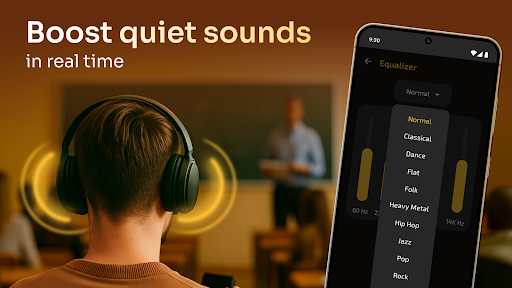
The main appeal of audio amplification is its ability to make microphone input more prominent through connected headphones. This can be useful for basic listening experiments or situations where users want to examine how their device captures environmental audio.
However, amplification does not automatically improve the quality of every sound. Increasing microphone sensitivity or volume can also make background noise more noticeable. For this reason, results are generally better when the surroundings are relatively quiet and the phone is positioned appropriately.
Super Ear- Listen To Next Door can provide an interesting way to explore smartphone audio capabilities without carrying additional recording equipment. Users can test how their phone responds to different environments and compare results with different headphones.
The app may also be useful for understanding basic concepts related to microphones and audio monitoring. Users interested in sound technology can experiment with distance, room acoustics, background noise, and different listening equipment while keeping their activities respectful of other people’s privacy.
Start by opening Super Ear and granting microphone access when required. Connect suitable headphones before beginning an audio test. Keep the phone at a comfortable and safe distance, then listen to the microphone input in a quiet environment.
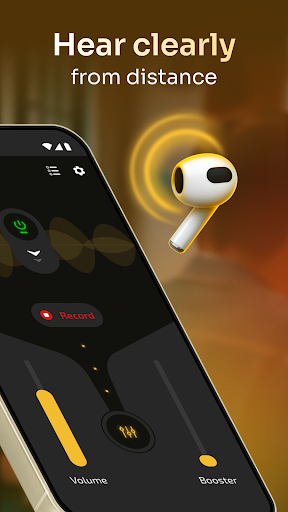
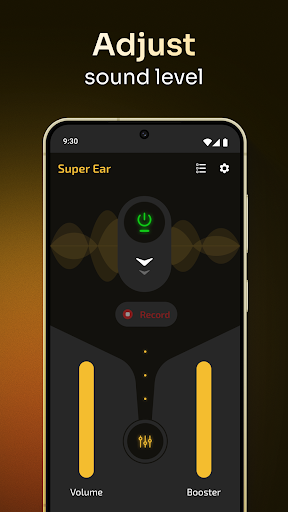
Adjust the available audio controls gradually rather than immediately selecting the highest volume. Excessive volume can be uncomfortable and may pose a risk to hearing. If background noise becomes distracting, move to a quieter location or reduce the amplification level.
Use the application only for appropriate personal audio purposes. Avoid using it to secretly monitor private conversations or capture sounds where people reasonably expect privacy. The app should complement responsible listening habits rather than encourage intrusive behavior.
Super Ear- Listen To Next Door offers a simple approach to smartphone-based sound amplification. By using the device microphone and headphones, it allows users to experiment with environmental audio and explore how different factors affect what they hear. Its effectiveness can vary depending on the phone, headphones, surroundings, and sound source.
The app is best considered a basic audio experimentation and listening tool rather than professional hearing equipment. Users who want to explore microphone sensitivity or amplify everyday sounds may find the concept interesting. Responsible use is equally important, particularly when other people’s privacy could be involved.