

Learn English w/ Grammar Games
v2.1
• Premium




| Updated On | |
|---|---|
| Google Play ID | com.selabs.speak |
| Category | Education |
| Version | 4.67.0 |
| Size | 88 MB |
| MOD Features | Unlocked |
| Requires | Android 8.0 |
| Price | |
| Free | |
| Content Rating | |
| Everyone | |
| Internet Required | |
| Unknow | |

Speak: Language Learning is a language learning app designed for people who want to improve their communication skills through practical speaking practice. Instead of relying mainly on traditional vocabulary exercises, the platform focuses on helping learners use a new language in realistic situations. This approach can be useful for students, travelers, professionals, and anyone who wants to become more comfortable speaking during everyday conversations.
Learning a language involves more than memorizing individual words. Learners need to understand expressions, form sentences, respond naturally, and become comfortable using the language aloud. Regular speaking practice can help turn passive knowledge into active communication skills and gradually improve confidence.
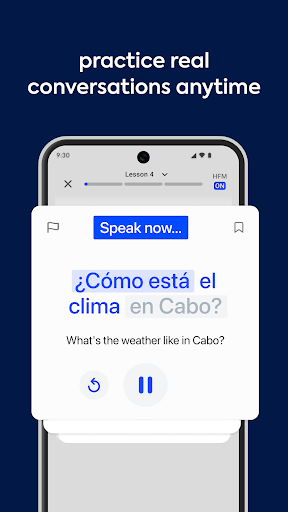
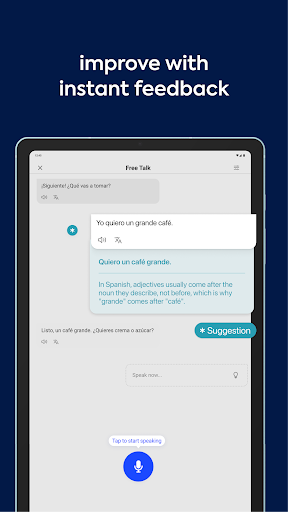
The main strength of Speak: Language Learning is its emphasis on spoken communication. Lessons are designed to encourage users to produce language rather than simply read or recognize answers. This can make practice more closely connected to real conversations.
Speaking regularly also helps learners become familiar with constructing sentences under pressure. With consistent practice, users can gradually reduce hesitation and respond more naturally.
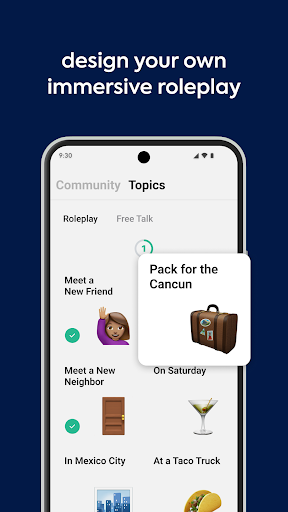
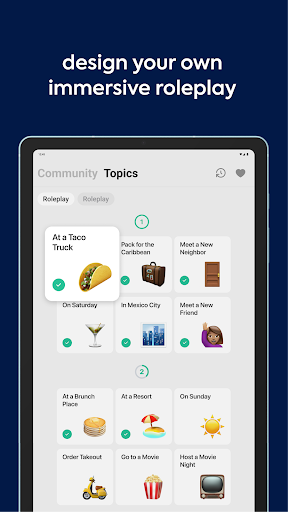
Learning through everyday situations can make language practice more meaningful. Users can work with expressions and conversations that may be useful when traveling, meeting new people, working, studying, or handling common daily activities.
Context is important because the same word or phrase can have different meanings depending on how it is used. Practicing complete expressions helps learners understand both meaning and usage.
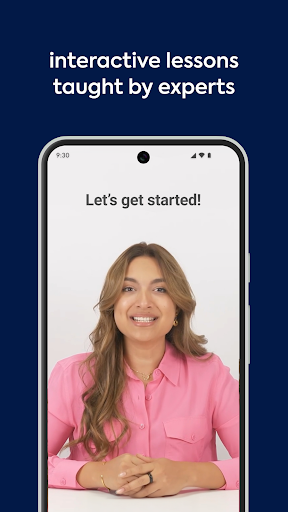
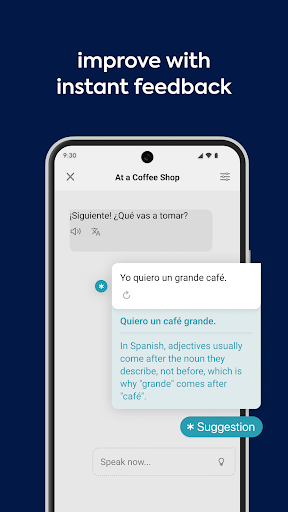
Speak: Language Learning provides an interactive approach that encourages learners to participate actively. Instead of passively reviewing information, users can practice producing language and receive opportunities to reinforce what they have learned.
This type of interaction can make lessons feel more engaging and encourage learners to maintain a regular study routine.
Mobile learning makes it possible to practice languages in different situations throughout the day. Users can study during breaks, while commuting, or whenever they have a few available minutes.
Short but frequent sessions can be particularly useful for language learning because regular exposure helps reinforce vocabulary and communication patterns.
Many learners understand a language reasonably well but feel nervous when they need to speak. Regular practice provides more opportunities to form sentences and express ideas, which can gradually make communication feel less intimidating.
Fluency develops through repeated use. Practicing complete responses can help learners become faster at retrieving vocabulary and organizing sentences without relying too heavily on translation.
Everyday communication often depends on phrases rather than individual words. Learning common expressions in context can help users sound more natural and understand how native speakers communicate.
Start by identifying why you want to learn a language. A clear goal, such as improving travel communication or developing workplace speaking skills, can help you focus on relevant lessons.
Work through lessons at a comfortable pace and pay attention to vocabulary, pronunciation, sentence structure, and conversational patterns. Avoid rushing through exercises simply to complete them.
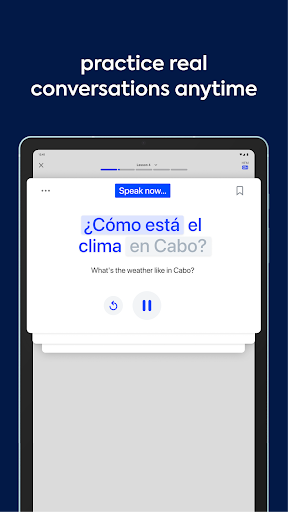
Participate actively in speaking exercises and say your answers aloud. Producing the language is essential because recognizing a sentence is different from being able to create one during a real conversation.
Return to expressions or lessons that cause difficulty. Repetition can strengthen memory and make challenging vocabulary easier to recall later.
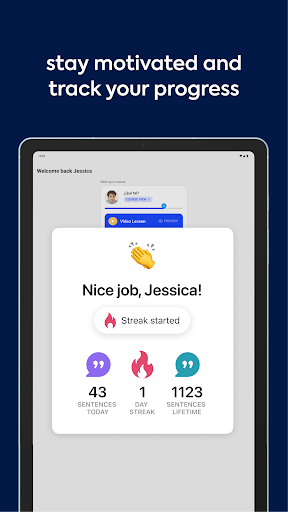
Set aside a regular time for language practice. Even short daily sessions can help maintain momentum and prevent previously learned material from being forgotten.
Try to speak aloud every day, even when you are studying independently. This helps make sentence production more automatic and gives you additional pronunciation practice.
Focus on communication rather than perfection. Mistakes are a normal part of learning, and correcting them can help you understand where improvement is needed.
Combine speaking practice with listening, reading, and writing. A balanced routine can strengthen different language skills and make it easier to understand conversations from multiple perspectives.
It is also helpful to learn phrases in context instead of memorizing long lists of isolated vocabulary. When expressions are connected to specific situations, they may be easier to remember and apply.
The biggest advantage of Speak: Language Learning is its communication-oriented approach. The focus on speaking and practical situations can make the learning experience more relevant for users who want to use a language outside the classroom.
The mobile format is another benefit because learners can practice without being tied to a fixed location. However, no single application can replace every aspect of language learning. Users who want comprehensive proficiency should also develop listening, reading, writing, and real-world interaction skills.
Speak: Language Learning is a practical option for learners who want to develop greater confidence and fluency through active speaking practice. Its focus on conversations, useful expressions, interactive activities, and flexible mobile learning can make language practice more connected to everyday communication.
For the best results, practice consistently, speak aloud, review challenging material, and combine the app with other forms of language exposure. With regular effort, learners can gradually become more comfortable forming sentences, responding to conversations, and using their target language in real situations.