
Periodic Table 2026: Chemistry
v4.0.75
• Unlocked
| Updated On | |
|---|---|
| Google Play ID | com.photoaispanish |
| Category | Education |
| Version | 1.9 |
| Size | 53 MB |
| MOD Features | Premium |
| Requires | Android |
| Price | |
| Free | |
| Content Rating | |
| Everyone | |
| Internet Required | |
| Unknow | |

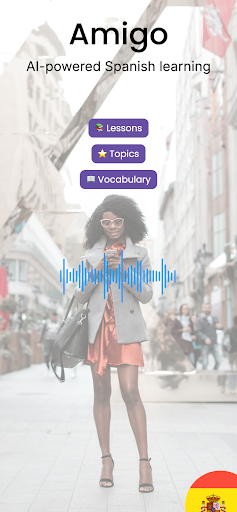
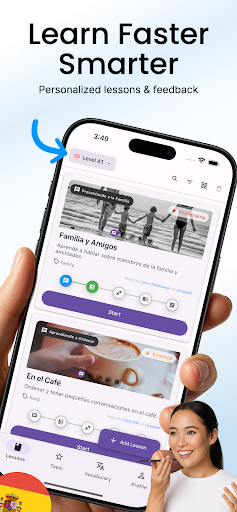
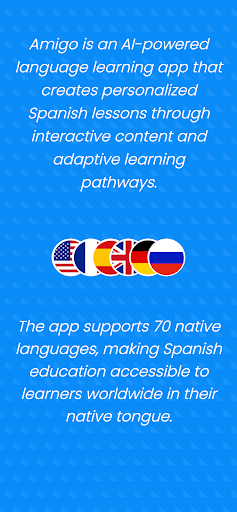
Learn Spanish with AI: Amigo is a language-learning app designed to help users practice Spanish through AI-supported conversations and interactive exercises. Instead of relying only on vocabulary lists, flashcards, or traditional lessons, the app can provide a more conversational learning experience. It may be useful for beginners and intermediate learners who want to practice forming sentences, expand their vocabulary, and become more comfortable using Spanish in everyday situations. The interactive approach can also make practice sessions feel more flexible and personal.
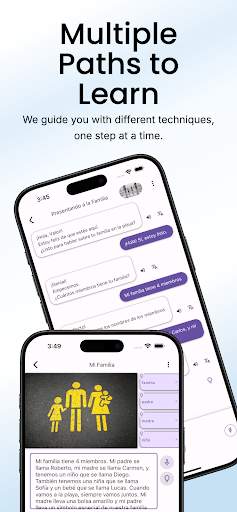
Conversation practice is an important part of learning a new language. Spanish learning with AI can give users opportunities to create responses, ask questions, and explore common expressions. Practicing in a conversational format may help learners become more familiar with sentence structures and reduce hesitation when trying to communicate in Spanish. Instead of simply selecting an answer, learners can actively construct their own responses and experiment with different ways of expressing an idea.
This type of practice can also be useful for learners who do not have regular access to a Spanish-speaking conversation partner. Users can practice at their own pace and repeat similar situations when they need more experience. Regular interaction may gradually make common phrases and sentence patterns easier to recall during real conversations.
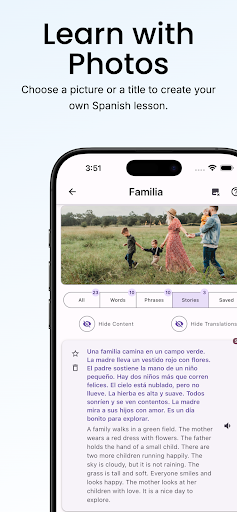
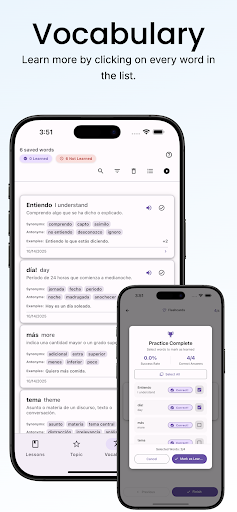
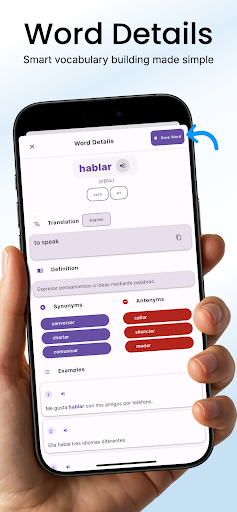
Memorizing individual words can be useful, but vocabulary becomes easier to apply when learners see it in context. The app can introduce words and expressions through conversations or practical situations. This approach allows users to understand how vocabulary is used instead of simply remembering isolated definitions. Repeated exposure can also help reinforce previously learned words.
Context is particularly helpful when a Spanish word has several possible meanings or when an expression sounds different from a direct translation. Seeing vocabulary within a conversation can help learners notice how words connect with other parts of a sentence. Users can also keep a personal list of unfamiliar terms and review them after completing a conversation.
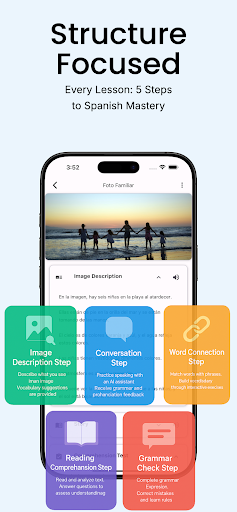
Spanish learners often need practice combining vocabulary and grammar into complete sentences. Interactive exercises can encourage users to construct responses rather than simply recognize correct answers. This can support a better understanding of word order, common grammatical patterns, and everyday expressions. Learners should still review grammar explanations when they encounter unfamiliar structures.
Writing or speaking complete responses can also reveal mistakes that may not appear during multiple-choice exercises. Learners may notice problems with verb forms, articles, gender, agreement, or sentence structure. Reviewing these mistakes can turn each practice session into an opportunity for targeted improvement.
Language skills become more useful when they can be applied to realistic situations. Conversation practice may cover topics such as introductions, travel, shopping, hobbies, work, or casual discussions. These scenarios can help users develop a wider range of expressions and become more comfortable responding without translating every sentence mentally.
Scenario-based practice can also help learners develop communication habits. For example, users can practice asking for clarification, giving opinions, describing experiences, or continuing a conversation with follow-up questions. These skills are useful because successful communication depends on more than grammatical accuracy. Learners also need to understand how to keep an interaction moving naturally.
Open Learn Spanish with AI: Amigo and explore the available lessons or conversation activities. Start with a level that matches your current Spanish ability and choose a familiar topic if you are new to conversational practice. Read each prompt carefully and respond in Spanish whenever possible. Review corrections or suggestions after each interaction and pay attention to recurring mistakes. Save unfamiliar vocabulary and expressions for later review.
For better progress, combine AI conversations with other forms of study. Read simple Spanish content, listen to native speakers, and practice speaking aloud. Try to answer without translating every sentence word by word. AI-generated corrections can be helpful, but they should be treated as learning guidance rather than an absolute authority. When a grammar point or expression seems unclear, checking a reliable Spanish reference can provide additional context.
Learn Spanish with AI: Amigo provides a conversational approach to Spanish practice by combining language learning with AI-supported interaction. Its focus on contextual vocabulary, sentence formation, and everyday conversations can give learners more opportunities to actively use Spanish. The flexible format may be especially useful for users who want additional practice outside traditional lessons or need a convenient way to study during short breaks.
However, AI-based practice works best as part of a broader learning routine. Listening to native speakers, reading Spanish texts, studying grammar, and speaking with real people can provide experiences that an app cannot fully reproduce. With consistent practice and careful review of mistakes, this type of interactive tool can become a useful supplement for learners working toward stronger Spanish communication skills.