
Litron Pro VPN
v11.0
• Premium
| Updated On | |
|---|---|
| Google Play ID | com.hisabaljamal |
| Category | Tools |
| Version | 2.5.28 |
| Size | 94 MB |
| MOD Features | Premium |
| Requires | Android 7.0 |
| Price | |
| Free | |
| Content Rating | |
| Everyone | |
| Internet Required | |
| Unknow | |

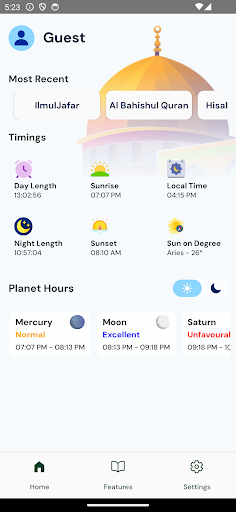
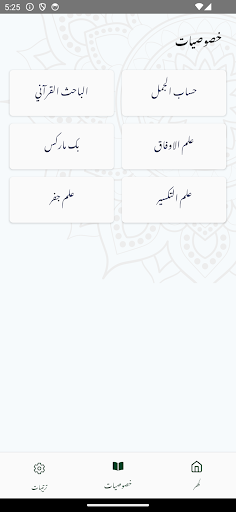
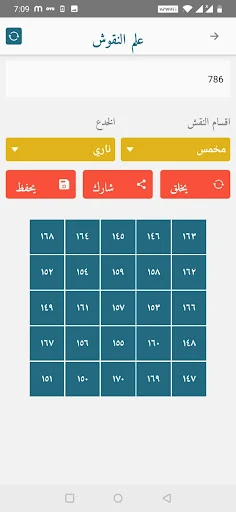
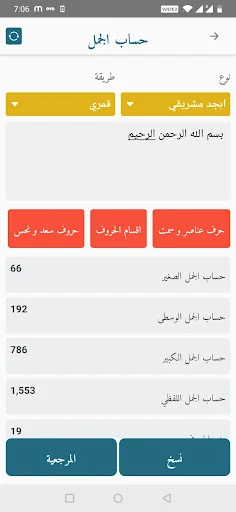
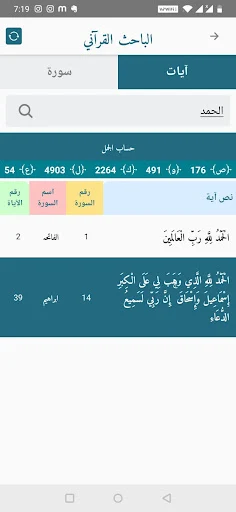
Hisab Al Jummal (حساب الجمل) is an educational and calculation app based on the traditional Arabic letter-number system known as Hisab al-Jummal. The method assigns numerical values to Arabic letters, allowing users to enter words or phrases and calculate their corresponding numerical totals. This can be useful for people interested in Arabic language, historical calculation methods, cultural studies, or traditional numerical systems. By bringing the calculation process to a mobile device, the app provides a convenient way to explore this traditional method without performing the calculations manually.
The central concept behind Hisab Al Jummal is assigning numerical values to individual Arabic letters. In the commonly used Abjad system, letters correspond to specific numbers, and the value of a word can be calculated by adding the values of its individual letters. This creates a connection between Arabic writing and numerical representation.
For learners, this can provide an interesting way to become more familiar with the Arabic alphabet. Instead of studying letters only as written symbols, users can also explore their traditional numerical associations. The system is rooted in historical conventions, so it can be especially relevant to users studying Arabic culture, manuscripts, classical texts, or traditional intellectual practices.
The app can simplify the process of calculating the numerical value of Arabic words or phrases. Rather than manually identifying each letter and adding its corresponding value, users can enter the desired text and use the available calculation functions. This makes experimentation faster and reduces the effort involved in basic arithmetic.
Results can also be useful for educational comparison. Users can enter different Arabic words and observe how their numerical totals differ. However, interpretations based on these numerical values depend on the specific tradition or purpose for which the system is being used. A calculated number should therefore be understood as a result of the chosen letter-value system rather than automatically treated as a linguistic or factual meaning.
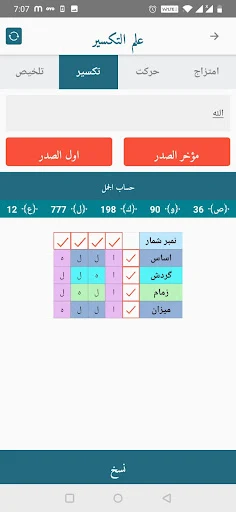
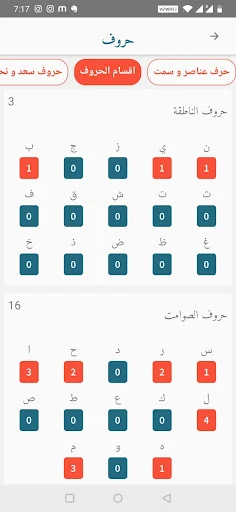
Traditional letter-number systems offer an additional perspective on Arabic writing. Students and enthusiasts can use the app to examine individual letters, words, and short expressions while learning how numerical values are assigned. This can make the study of Arabic scripts more interactive and encourage users to explore historical approaches to written language.
The tool may also be useful for researchers or readers working with historical material. When encountering references to Abjad values in a text, having a calculator available on a phone can make it easier to check the numerical values of specific words. It should still be used alongside reliable academic or historical sources when studying specialized subjects.
Manual calculation can become time-consuming when a phrase contains many letters. A dedicated calculator can reduce repetitive arithmetic and allow users to focus on the result and its context. This is particularly useful when comparing multiple words or testing different spellings.
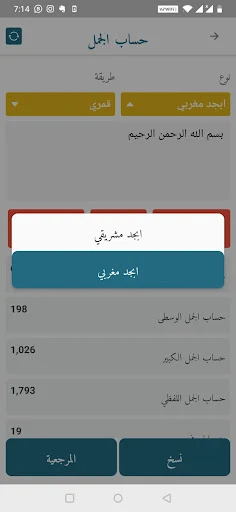
Accuracy also depends on the selected calculation convention. Different traditions may handle certain letters, spelling variations, or orthographic details differently. Users should therefore check which system the app applies when precise historical or academic results are important.
Open Hisab Al Jummal (حساب الجمل) and enter an Arabic word or phrase into the available input area. Review the calculated numerical value and, when provided, examine the individual letter values contributing to the total. Try entering several words to compare their results and become familiar with the relationship between Arabic letters and numbers.
For learning purposes, start with short and familiar Arabic words. Check the value of each letter and compare the total with the app’s calculation. When studying historical or traditional material, record the calculation method being used and compare results with reliable references. This is especially important when different Abjad conventions may produce different outcomes.
Hisab Al Jummal (حساب الجمل) provides a convenient mobile approach to exploring the traditional relationship between Arabic letters and numerical values. Its calculation-focused design can be useful for Arabic language learners, cultural enthusiasts, students, and readers interested in historical numerical systems. By simplifying the process of adding letter values, the app makes experimentation and basic study more accessible. At the same time, users should consider the historical context and calculation convention behind each result rather than assigning automatic meanings to numerical totals. Used as an educational and exploratory tool, it offers an interesting way to discover an important aspect of traditional Arabic letter-number practices.