home chevron_right Apps chevron_right Photos & Videos chevron_right Adobe Lightroom

Remover bg – HD Photo Editor
vV8.9.46
• Premium Unlocked

| Updated On | |
|---|---|
| Google Play ID | com.adobe.lrmobile |
| Category | Photos & Videos |
| Version | 11.5.31 |
| Size | 238 MB |
| MOD Features | Premium Unlocked |
| Requires | Android |
| Rating Score | |
| Price | |
| Free | |
| Content Rating | |
| Everyone | |
| Internet Required | |
| Required | |
| Languages | |
| English, Dutch, French, German, Indonesian, Italian, Japanese, Korean, Polish, Portuguese, Russian, Simplified Chinese, Spanish, Swedish, Thai, Traditional Chinese, Turkish, Vietnamese | |

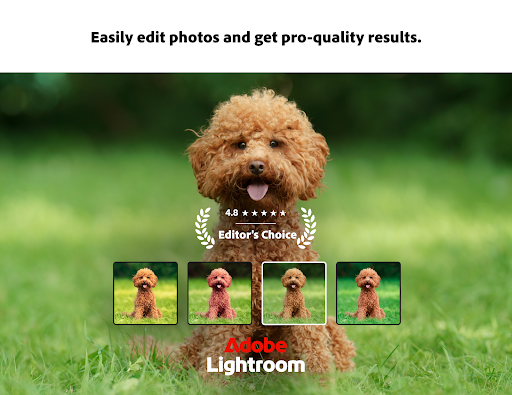
Adobe Lightroom provides a comprehensive collection of tools for enhancing, organizing and refining digital photos. Users can adjust colors, apply presets, improve details and manage images through a structured editing workflow. This article examines its main features, editing capabilities and overall experience for photography enthusiasts. Discover how the editor supports more flexible photo editing on mobile devices.
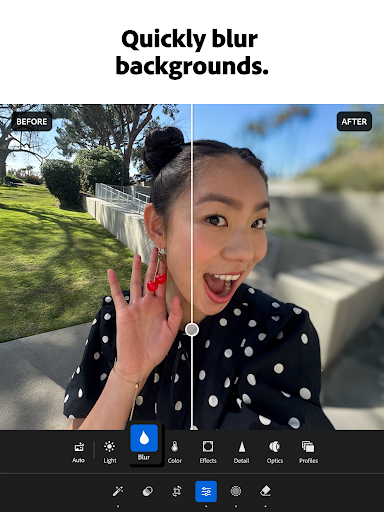
Adobe Lightroom is a versatile creative tool for users who want to improve photos and short videos without relying on complicated desktop software. The editor combines automatic adjustments with detailed manual controls, making it possible to enhance exposure, color, sharpness, composition, and other visual elements while preserving a natural appearance.
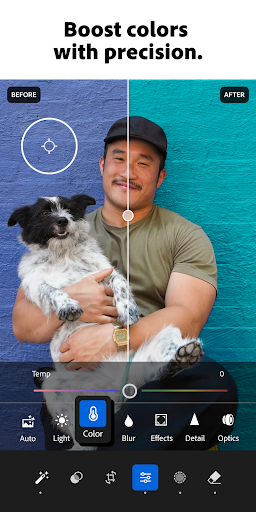
Adobe Lightroom is a photo-focused editing application from Adobe that provides a broad set of tools for capturing, organizing, enhancing, and exporting visual content. Instead of depending entirely on ready-made filters, users can fine-tune individual parameters such as exposure, contrast, highlights, shadows, whites, blacks, temperature, tint, texture, clarity, and sharpness to achieve a more controlled result.
The application is suitable for both casual photographers and creators who want greater precision over their images. RAW support on compatible devices also gives users more flexibility when working with photographs that contain a larger amount of original image information, while automated adjustment tools can speed up routine corrections when a quick result is preferred.
The editing workspace on Adobe Lightroom is built around clearly labeled controls and adjustable sliders, allowing users to make changes without navigating through an overly complicated menu structure. After importing an image or capturing content, users can move between different adjustment categories, preview changes immediately, compare results, and refine the image until the desired appearance is achieved.
The workflow is designed to reduce unnecessary steps, which makes it practical for quick edits on mobile devices. Basic corrections can be completed within minutes, while users who want more control can gradually explore advanced color, lighting, detail, and composition adjustments.
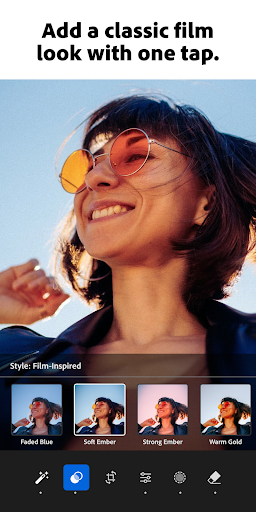
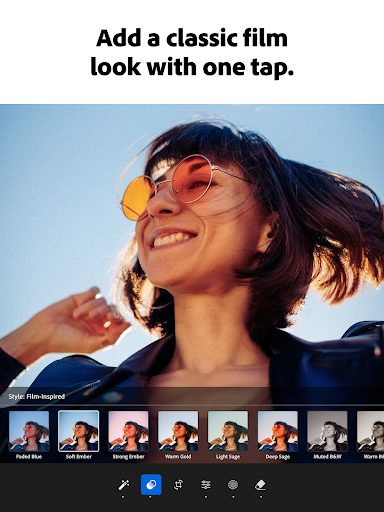
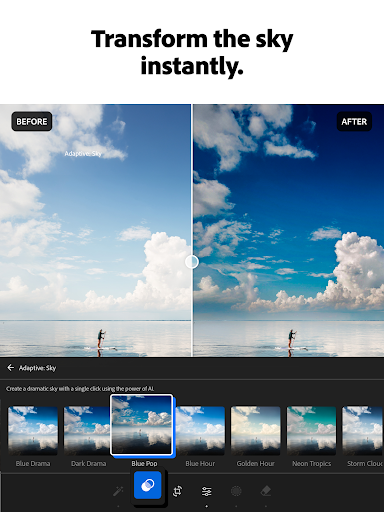
Presets provide a faster way to apply a consistent visual style without manually adjusting every parameter from the beginning. Instead of treating a preset as a fixed filter, users can apply it as a starting point and then modify exposure, color, contrast, temperature, or other settings to better match the individual photograph.
For creators who frequently produce content with a recognizable style, custom presets can also save considerable time. Once a preferred combination of adjustments has been created, it can be saved and reused across future images, helping maintain a consistent appearance across a collection, project, or social media feed.
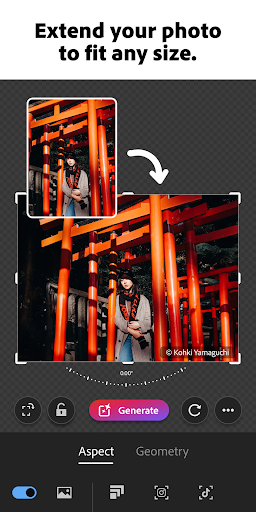
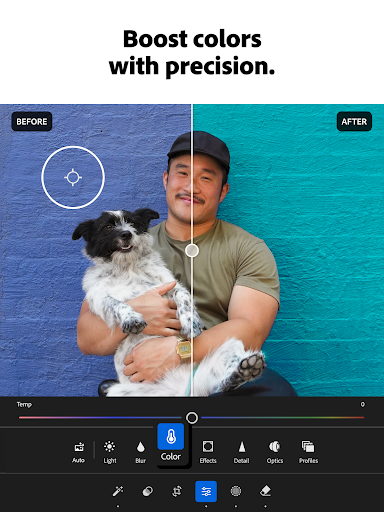
The editing system of Adobe Lightroom covers both fundamental corrections and more detailed adjustments, allowing users to progress from simple improvements to advanced color grading. Common controls include crop, rotate, exposure, contrast, highlights, shadows, whites, blacks, temperature, tint, texture, clarity, dehaze, and sharpening, giving users considerable control over the final appearance.
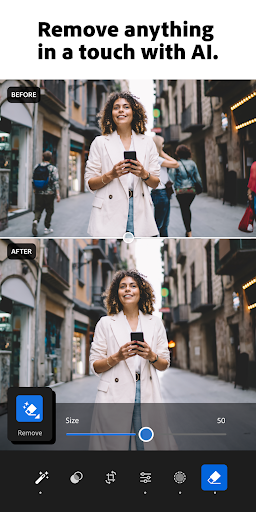
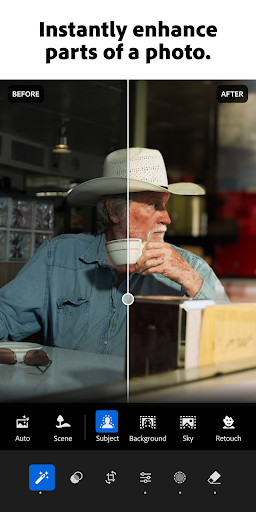
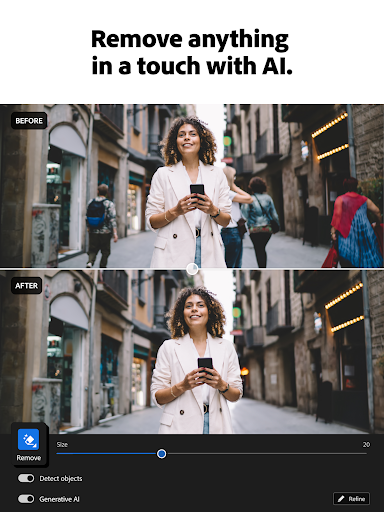
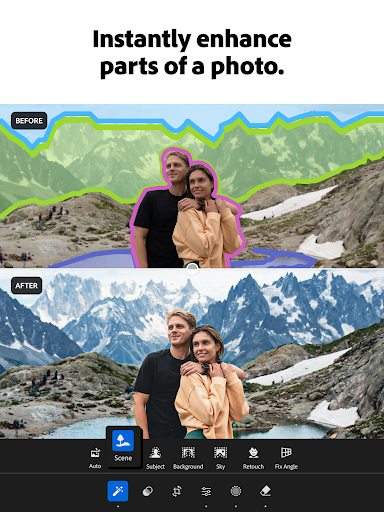
For users who prefer a faster workflow, automated tools can analyze an image and suggest adjustments to improve lighting, tonal balance, color, and overall presentation. More experienced photographers can work with features such as curves, color mixing, selective adjustments, masking, detail controls, and other advanced options where supported by the device and application version.
A typical editing workflow can be organized into several stages, making it easier to approach a photograph systematically:
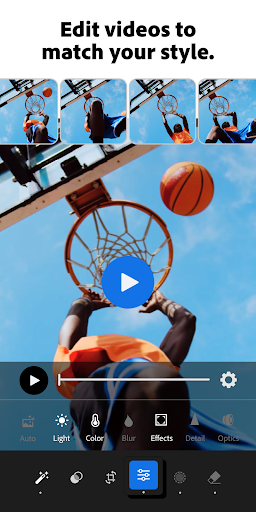
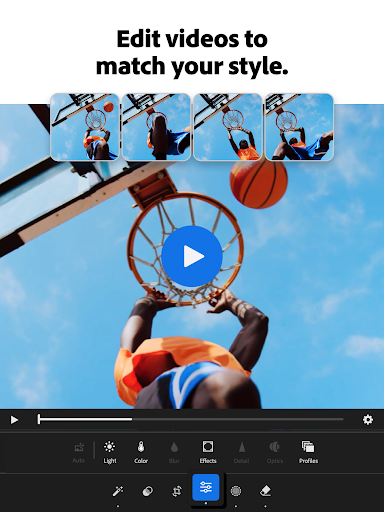
Although its reputation is strongly associated with photography, the editor can also be used for basic video adjustments. Users can work with supported video clips, make timing-related edits, apply visual adjustments, and maintain a consistent color style between photographs and video content.
For short-form projects, this can be useful when creators want their images and clips to share a similar visual identity. However, dedicated video-editing applications may remain more suitable for complex projects that require advanced transitions, multi-track timelines, extensive audio editing, or sophisticated motion graphics.
Modified APK releases are unofficial versions distributed by third parties and may alter selected functions compared with the official application. Some packages advertise access to Premium editing tools, additional presets, advanced adjustments, or an ad-free experience, but the actual features can vary according to the developer, release version, Android device, and installation source.
One of the most common claims associated with modified releases is access to Premium tools without purchasing an official subscription. Depending on the package, this may include additional presets, advanced adjustment controls, premium masking tools, or expanded editing resources; however, these functions are not guaranteed and may stop working after an application or server-side update.
Login Adobe Lightroom depends on how the modified package has been developed and whether its account-related components remain compatible with Adobe’s online services. Some releases may provide standard sign-in options, while others can restrict cloud synchronization or account-based Premium functions. If the installed package supports account access, users may encounter several common options:
This section answers several common questions about pricing, editing quality, usability, and alternatives for Android users. The explanations also distinguish between standard access, paid features, and the capabilities typically associated with professional photo-editing workflows.
The application provides a range of editing functions that can be used without purchasing a paid plan, while selected advanced features and cloud-related services may require a subscription. Pricing can vary by country, platform, subscription type, and promotional period, so the current price should be checked through Adobe’s official pricing information rather than relying on a fixed figure such as $10 per month.
Free access can be sufficient for basic adjustments such as exposure, cropping, color correction, and other everyday edits. A paid plan generally expands access to premium tools, additional cloud storage, advanced editing capabilities, and other features depending on the subscription package.
A paid subscription does not automatically make the original photograph higher in quality. Instead, it can provide access to more sophisticated editing tools that give photographers greater control over exposure, color, masking, detail, noise reduction, and other parameters, allowing them to achieve a more refined final result.
For example, working with RAW photographs can provide considerably more editing flexibility than heavily compressed image formats because more original image information is retained. The final quality still depends on factors such as the source image, camera, lens, resolution, lighting, export settings, and the user’s editing decisions.
The interface is designed around a relatively straightforward workflow, making it accessible to beginners while still providing detailed controls for more experienced photographers. Basic adjustments can be completed with sliders and preset-based workflows, while advanced users can gradually explore features such as selective editing, color control, masking, and RAW processing.
Compared with more complex desktop-oriented editors, the workflow can feel more focused on photography rather than extensive graphic design. Users who regularly work with RAW images may particularly benefit from its combination of non-destructive editing, organized controls, and flexible image-adjustment options.
Popular options include Snapseed, Picsart, Canva, VSCO, PhotoRoom, and Polish. Each app focuses on different needs, from professional adjustments and filters to retouching, graphic design, and social-media content.
Adobe Lightroom brings photography, photo editing, and basic video editing together in one versatile creative tool. A wide selection of filters, presets, and adjustment options makes it easier to refine images and develop a personal visual style. Its intuitive workflow is suitable for both everyday edits and more detailed creative projects. Start exploring this app today and give your favorite photos a fresh, professional look.
You can sign in with Facebook or Adobe ID.
Otherwise, you can create a new account with Email.
Some Premium features require you to sign in. Please sign in with your Adobe account.