home chevron_right Games chevron_right Simulation chevron_right Spaceflight Simulator

SimplePlanes
v1.12.212
• Simulation
| Updated On | |
|---|---|
| Google Play ID | com.StefMorojna.SpaceflightSimulator |
| Category | Simulation |
| Version | 1.6.00.22 |
| Size | 91 MB |
| MOD Features | Unlocked |
| Requires | Android 6.0 |
| Price | |
| Free | |
| Content Rating | |
| Everyone | |
| Internet Required | |
| Not Required | |
| Languages | |
| English | |

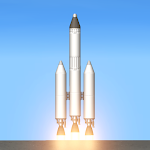
Spaceflight Simulator turns the complex process of space exploration into an interactive simulation where players design rockets, launch spacecraft, and travel between celestial bodies. With realistic orbital mechanics, different gravitational conditions, and a flexible construction system, the game offers plenty of opportunities to experiment with aerospace engineering. Whether you want to reach the Moon or attempt a more ambitious journey to Mars, every successful mission depends on your ability to plan, calculate, and control your spacecraft.
Spaceflight Simulator focuses on the excitement of building a spacecraft from individual components and sending it beyond Earth’s atmosphere. Rather than following a fixed storyline, the game gives players considerable freedom to create their own missions and discover the challenges of traveling through space.
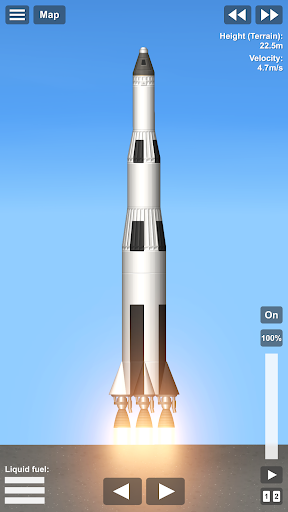
At first, controlling a spacecraft may seem complicated because several technical factors influence every launch. However, the basic gameplay becomes easier once you understand how to assemble components, monitor flight information, and control the rocket during different stages. Before launching, you should check the vehicle’s configuration, fuel capacity, thrust, and overall balance to make sure it can leave the ground successfully.
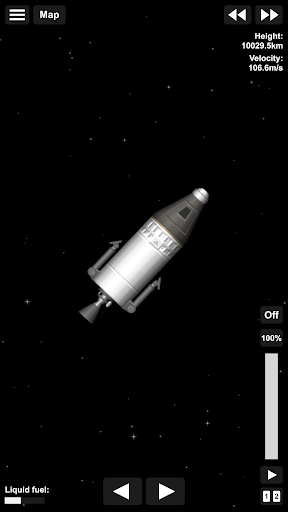
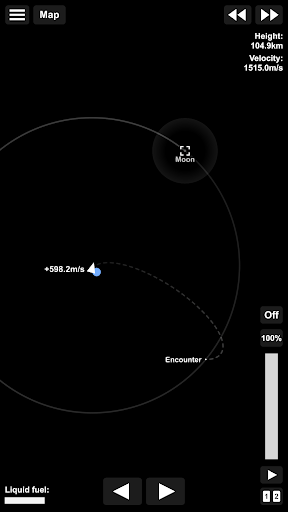
As missions become more ambitious, simply building a powerful rocket is no longer enough. You must account for distance, gravitational pull, orbital speed, and fuel consumption when planning a route. During flight, monitoring the spacecraft’s trajectory and adjusting its direction at the right moment will help you avoid unnecessary fuel usage. Every successful mission provides valuable experience for handling more complicated journeys.
One of the most exciting aspects of Spaceflight Simulator is its collection of celestial destinations. The game recreates the relative scale of planets and moons, giving players an opportunity to experience how distance and gravity influence space travel. Each destination introduces different conditions, meaning a rocket design that works well on one mission may require adjustments for another.
The available celestial bodies include:
Mercury: A rocky planet close to the Sun, offering a different destination for players interested in inner Solar System exploration.
Venus: Known for its extremely dense atmosphere and harsh surface conditions, making it a challenging destination.
Earth: The starting point for most missions and the primary location for testing newly assembled rockets.
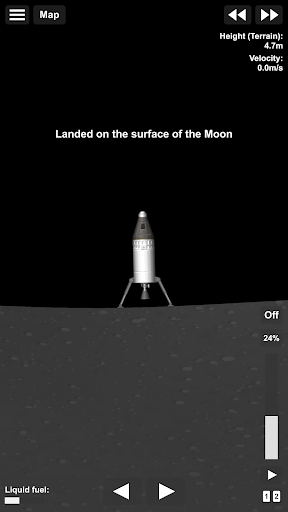
The Moon: A familiar destination that provides an opportunity to practice orbital transfers and controlled landings.
Mars: The Red Planet, featuring a thin atmosphere and conditions that require careful landing preparation.
Phobos: One of Mars’ moons, characterized by irregular terrain and very weak gravity.
Deimos: The smaller and more distant Martian moon, offering another interesting target for spacecraft exploration.
These destinations encourage players to experiment with different flight plans. Understanding their gravitational conditions and orbital positions is essential when preparing a spacecraft for long-distance travel.
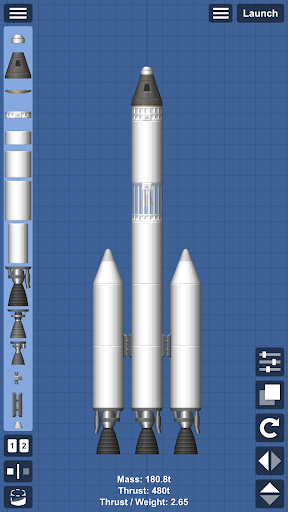
Rocket construction is at the heart of the experience. Every mission begins with selecting suitable components and arranging them into a functional vehicle, giving players the freedom to experiment with different designs.
Spacecraft construction requires more thought than simply attaching random parts together. You need to combine engines, fuel tanks, structural sections, landing equipment, and other available components into a balanced system. Each part serves a particular purpose, so selecting the right combination directly influences the vehicle’s performance.
Engine power and fuel capacity are particularly important when planning longer journeys. A rocket carrying too much equipment may become unnecessarily heavy, while insufficient fuel can prevent it from reaching its destination. Players should also consider the arrangement of individual stages to ensure that the spacecraft can separate components at the appropriate moments. Testing different configurations is an effective way to understand how each design behaves during flight.
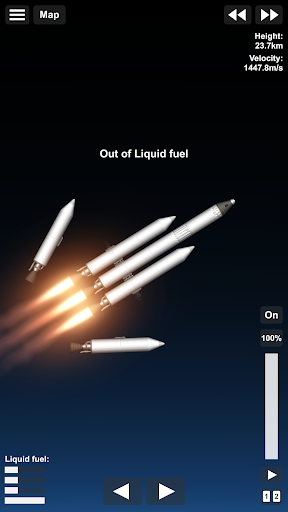
Multi-stage rockets allow players to discard components that are no longer needed during a mission. Once a fuel tank or engine has completed its function, separating that section reduces the spacecraft’s overall mass and allows the remaining vehicle to continue more efficiently.
Timing is important because releasing a component too early may interrupt the flight, while keeping unnecessary equipment attached increases the weight of the spacecraft. You must monitor fuel levels, engine performance, and the current flight stage before activating separation. When handled correctly, this system makes it easier to reach higher altitudes, adjust orbital paths, and prepare the remaining spacecraft for its next objective.
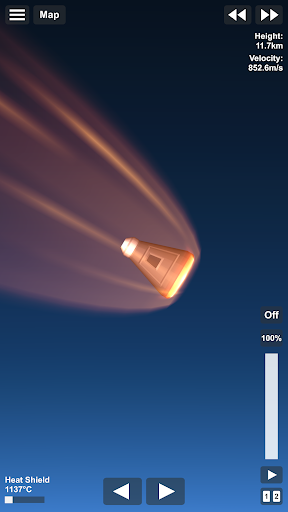
Reaching another planet is only half the challenge, as a successful mission also requires controlled navigation and landing. Different celestial bodies have varying gravitational forces, surface conditions, and atmospheric properties. These differences affect how quickly a spacecraft descends and how much control you have during the final approach.
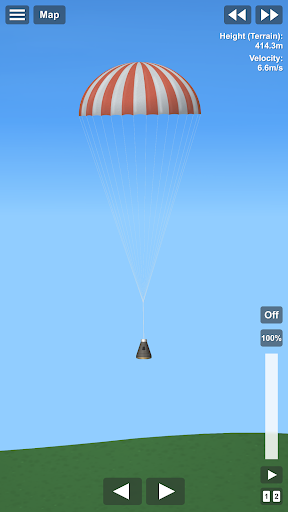
Players need to manage their engines carefully, adjust their trajectory, and reduce speed before touching down. Landing equipment also plays an important role in preventing damage when the spacecraft reaches the surface. Since fuel is limited, every adjustment should serve a clear purpose. A well-planned landing not only completes the mission but also demonstrates how effectively you have managed the entire flight.
After reaching a destination, players can continue exploring and working toward new objectives. Different missions encourage you to test spacecraft designs, visit unfamiliar locations, and improve your understanding of space navigation. Some journeys focus on reaching a specific celestial body, while others require more complicated flight arrangements and carefully managed landings.
The open-ended structure gives you room to create personal challenges instead of following a strictly linear progression. You can experiment with smaller spacecraft, construct larger launch systems, or plan multiple stages of exploration. Each completed journey provides another opportunity to refine your engineering skills and attempt more ambitious projects.
The modified edition offers an additional way to experience the game by changing access to certain content. It may be suitable for players who want to explore more construction possibilities without following the usual progression restrictions.
The Unlocked feature provides access to additional game content that may otherwise require progression or separate access in the standard release. This gives players more freedom to experiment with spacecraft designs, explore available construction options, and develop different mission plans. The exact content included can vary depending on the MOD version, so check the package description before downloading.
Ready to design your first spacecraft and begin an interplanetary adventure? You can find Spaceflight Simulator MOD APK through APKMODY by searching for the game on the website. Before downloading, compare the available package information and make sure the selected release is compatible with your Android device.
Use this alternative installation approach to get started:
Locate the game page: Access APKMODY through your mobile browser and search for Spaceflight Simulator MOD APK.
Inspect the release: Read the version details, MOD description, file size, and Android requirements to identify a suitable package.
Save the installation file: Tap the appropriate download option and wait until the APK is completely saved on your device.
Prepare Android: Open your device settings and review the option for installing applications from unknown sources if the system requests additional authorization.
Finish the setup: Locate the downloaded APK, open it, and follow the installation instructions displayed on your screen.
Begin your mission: Launch the game, explore the available components, and start assembling your first rocket.