
Chat AI: AI Chat Bot Assistant
v2.1.5
• Premium Unlocked
| Updated On | |
|---|---|
| Google Play ID | com.teamviewer.teamviewer.market.mobile |
| Category | Utilities |
| Version | 15.83.298 |
| Size | 80 MB |
| MOD Feature | Not available |
| Requires | Android 8.0 |
| Price | |
| Free | |
| Content Rating | |
| Everyone | |
| Internet Required | |
| Required | |

TeamViewer makes remote access and device management more convenient by allowing users to connect computers, smartphones and tablets over the Internet. Whether you need to assist a colleague, transfer important files or access your work computer while traveling, this application provides practical tools for handling everything remotely. With cross-platform compatibility, straightforward controls and multiple security features, TeamViewer is a useful solution for both personal and professional activities.
As remote working and online collaboration become increasingly common, having a reliable way to access devices from different locations is essential. TeamViewer addresses this need through a collection of remote control, file transfer and communication features.
The way people work has changed considerably as digital communication becomes an essential part of everyday activities. Teams no longer need to share the same office to exchange information, troubleshoot technical problems or coordinate important projects. Remote connectivity applications have therefore become valuable tools for individuals and organizations alike.
TeamViewer has established its position in this field by offering a practical way to access and interact with other devices through an Internet connection. Instead of physically visiting another computer, you can establish a remote session and perform supported operations directly from your own device. This flexibility is particularly useful for employees, IT specialists and people who regularly assist friends or family members with technical issues.
TeamViewer is a remote connectivity application developed to help users access and control compatible devices from a distance. It allows computers, smartphones and tablets to communicate through an Internet-based connection, making it possible to perform various tasks without being physically present near the target device.
The application supports multiple operating systems, including Windows, macOS, Linux, Android and iOS, although available functions may differ depending on the device and platform. For Android users, it provides a convenient way to access supported computers or receive remote technical assistance through compatible TeamViewer applications.
Rather than limiting communication to simple file exchanges, TeamViewer creates an interactive connection between devices. Depending on the permissions and features available, you can view another screen, operate supported functions, transfer documents and provide technical support.
TeamViewer offers several tools that make remote collaboration easier across different working environments. Its main capabilities extend beyond controlling another screen, providing a flexible platform for everyday digital tasks.
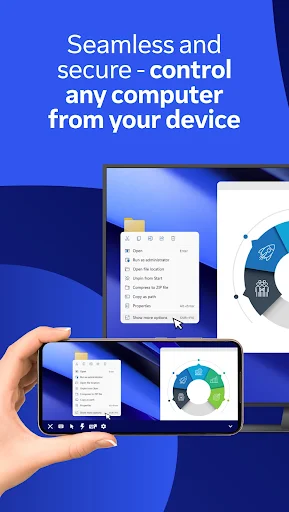
Remote device control: Access compatible computers and interact with their desktop environments without being physically present. This is particularly useful when you need to retrieve information or operate software installed on another machine.
Screen sharing: Display your screen to other participants during presentations, demonstrations or technical support sessions. This helps explain complicated procedures without requiring everyone to gather in one location.
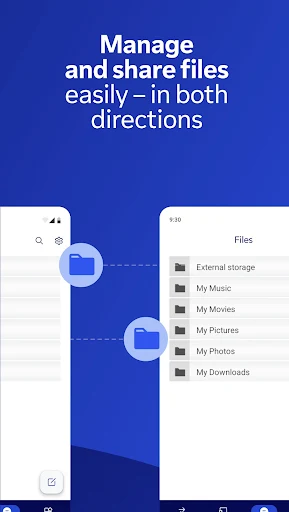
File transfer: Exchange documents and other supported files between connected devices. This feature is convenient when working with colleagues who need access to important materials.
Online collaboration: Use supported meeting and communication features to coordinate activities, demonstrate workflows and discuss projects with remote participants.
Technical assistance: Help other users diagnose problems, adjust settings or resolve common computer issues through an authorized remote session.
These functions make TeamViewer suitable for different situations, from accessing personal files at home to providing professional IT support for an organization.
TeamViewer stands out through its combination of accessibility, platform support and practical connectivity features. Instead of requiring users to work with complicated network configurations, the application provides a relatively straightforward process for establishing remote sessions.
Some notable advantages include:
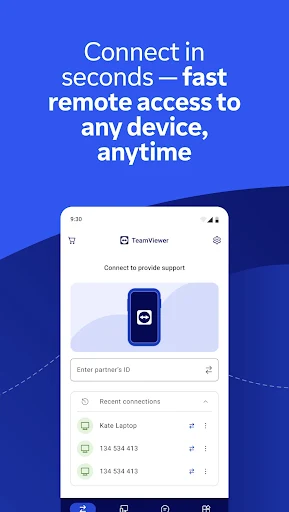
Fast connection setup: Users can establish remote sessions through the appropriate device ID and authentication information, provided both devices have a suitable Internet connection.
Firewall compatibility: TeamViewer is designed to establish connections across many common network environments without requiring users to manually configure traditional incoming connections. However, restrictive firewalls and proxy settings may still affect connectivity.
Flexible usage options: Individual users can access eligible free features for personal use, while businesses and organizations can choose commercial plans with additional capabilities.
User-friendly interface: Clearly arranged menus and connection controls help newcomers understand the essential functions without spending too much time learning the application.
Cross-platform support: Connect compatible computers and mobile devices running different operating systems, making collaboration easier across mixed-device environments.
Multiple language options: The application supports numerous languages, helping users navigate its features more comfortably, including those who prefer Vietnamese.
Convenient file exchange: Transfer supported documents and other files between connected devices without relying entirely on separate storage or messaging services.
Together, these advantages make TeamViewer a versatile option for people who frequently work with multiple devices or need to provide remote assistance.
Security is particularly important when using remote access software because an active connection may provide another person with access to sensitive information. TeamViewer addresses this concern through several protection mechanisms designed to control how remote sessions are established and maintained.
Connections use encryption to protect communication between supported devices. Authentication requirements also help verify that users have the appropriate credentials before accessing a remote computer. Depending on the configuration, additional safeguards such as two-factor authentication and device access restrictions can provide another layer of protection.
Users can also manage permissions for individual sessions, deciding which operations remote participants are allowed to perform. For example, you should only grant screen viewing, file transfer or full remote control when those functions are genuinely necessary.
It is important to remember that remote access security also depends on individual settings and user behavior. Never share connection credentials with untrusted people, approve unexpected access requests or leave unattended sessions open unnecessarily. By combining TeamViewer’s security features with sensible access management, you can reduce the risks associated with remote connectivity.
Getting started with TeamViewer does not require an elaborate configuration process. However, the installation method depends on which device you want to control and which one will initiate the connection.
For example, if you want to access a computer from your Android phone, follow this procedure:
Visit APKMODY using your mobile browser and search for TeamViewer.
Open the application’s download page, review the available version information and download the Android APK.
Install the application on your smartphone and launch it after the setup is complete.
On the computer you intend to access, install the compatible TeamViewer desktop application from its official website.
Open TeamViewer on the computer and locate its connection ID and authentication details.
Return to your Android device, enter the required connection information and initiate the remote session.
Approve the connection on the receiving device when prompted, then follow the displayed instructions to begin remote access.